GIANNI ASDRUBALI
BIOGRAPHY
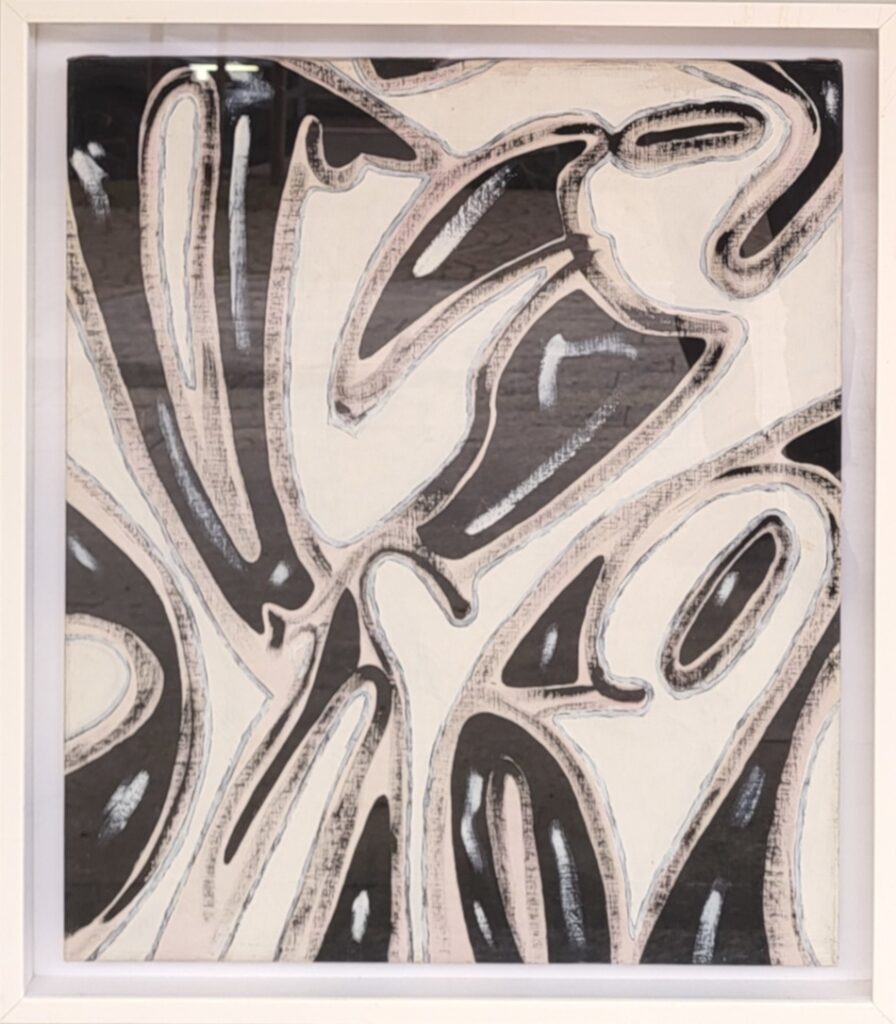
Since 1979, Asdrubali has focused his research on the concept of the void as the primordial core of his work.
Over the years, this inquiry has taken shape in the image of an a-dimensional frontal space.
In 1984, in opposition to the prevailing artistic climate of the time (Transavanguardia and Postmodernism), he joined the *Astrazione Povera* (Poor Abstraction) movement, theorized by critic Filiberto Menna.
During this same period, he held his first exhibitions at the La Salita gallery in Rome and the Artra gallery in Milan.
Since then, he has been invited to numerous national and international exhibitions. In 1985, he participated in the Rome Quadriennale. That same year, he took part in the *Anniottanta* exhibition—held across Bologna, Imola, Ravenna, and Rimini—which sought to map the art of that era; the exhibition highlighted distinctive trends such as *Citazionismo* (Quotationism), *Decorativismo* (Decorativism), the *Nuovi-nuovi*, the *Anacronisti* (Anachronists), the *Astrattomagici* (Magic Abstractionists), and artists associated with the *Pastificio Cerere* and *Astrazione Povera*.
In 1988, at the invitation of Giovanni Carandente, he exhibited *Eroica verde* at the Venice Biennale—a work that marked his definitive departure from the *Astrazione Povera* group.
Also in 1988, Veit Loers invited him to the *Schlaf der Vernunft* exhibition at the Museum Fridericianum in Kassel, alongside artists such as John Armleder, Gianni Colombo, Gerwald Rockenschaub, Richard Deacon, Günther Förg, Jeff Koons, Thomas Schütte, and Haim Steinbach. That same year, Flavio Caroli invited him to participate in the Australian Biennale in Sydney and to exhibit at the National Gallery of Victoria in Melbourne. In 1989, he exhibited in Moscow at the Central House of Artists and subsequently in Leningrad at the Central Exhibition Hall as part of the *Orientamenti dell’Arte Italiana* (Trends in Italian Art) exhibition. In 1990, he exhibited at the National Taiwan Museum of Fine Arts during the *Italian Contemporary Arts* exhibition.
In 1990, he exhibited at the Museu de Arte Moderna in São Paulo, Brazil.
In 1992, he created the *Tromboloide*—a work lacking a specific orientation—marking a significant moment in his career as he defined an increasingly compact and atomic space. In 1993, he participated in the exhibition *La Fabbrica Estetica* at the Grand Palais in Paris. In 1996, he was invited by Giovanna Bonasegale to the exhibition *Lavori in Corso* at the Galleria Comunale d’Arte Moderna e Contemporanea in Rome (now MACRO). Between 1997 and 2000, he exhibited in a series of shows dedicated to Italian art, including at the Museum Rabalderhaus in Schwaz, the DuMont Kunsthalle in Cologne, the Galleria d’Arte Moderna in Bologna, and the Städtische Galerie in Rosenheim. In 2000, he exhibited alongside artist Enrico Castellani at the Arte Studio Invernizzi gallery in Milan.
In 2001, a retrospective of his work was held at the Institut Mathildenhöhe in Darmstadt. In 2003 and 2005, he participated in two exhibitions at MACRO (Museum of Contemporary Art of Rome). Between 2003 and 2010, he collaborated with artist and designer Pamela Ferri as part of the Zamuva research group, which was established to investigate new forms of spatiality at the intersection of art and science. In 2005, the research project *Spazio Frontale* was published by Giampaolo Prearo Editore and presented at the Artra gallery in Genoa; the publication featured a critical text by Bruno Corà, with design and research by Pamela Ferri. Between 2006 and 2009, research into “Frontal Space” was documented and presented—including through a collaboration with the Formulas group—in contexts exploring the relationships between mathematics, art, and space. These included various editions of the Genoa Science Festival (at venues such as the Palazzo Ducale and the Magazzini del Cotone) and the Rome Mathematics Festival at the Auditorium Parco della Musica. In 2010, the *Zudynamic* project was presented as part of the “Abitare Talks” at the Triennale Design Museum in Milan, featuring a presentation dedicated to the transition from Asdrubali’s “frontal emptiness” to Ferri’s “spatial surfaces.”
In 2011, he was invited to exhibit at the Italian Pavilion of the 54th Venice Biennale. In 2013, the artist created a series of large-scale ceramic works at the Bottega Gatti in Faenza, some of which were exhibited in 2014 at the Contemporary Ceramic Art Biennale (BAC) at the Scuderie Aldobrandini in Frascati. That same year, at the Montelupo Ceramics Museum—as part of the *Materia Prima* initiative promoted by the municipality and conceived by Marco Tonelli—a large-scale monumental work measuring 14 x 4 meters was installed on the banks of the Pesa River. Through the medium of ceramics, Asdrubali fulfills the true destiny of his works: genuine environmental installations that activate the space in which they are situated. The work acquired by the International Museum of Ceramics (MIC) in Faenza during the 2016 “Contemporary Art Week” is also executed in ceramic. In 2018, the Carlo Bilotti Museum in Rome dedicated a major exhibition to him, showcasing some of the most significant pieces of his oeuvre, while MACRO hosted him for a live painting intervention.
WORKS