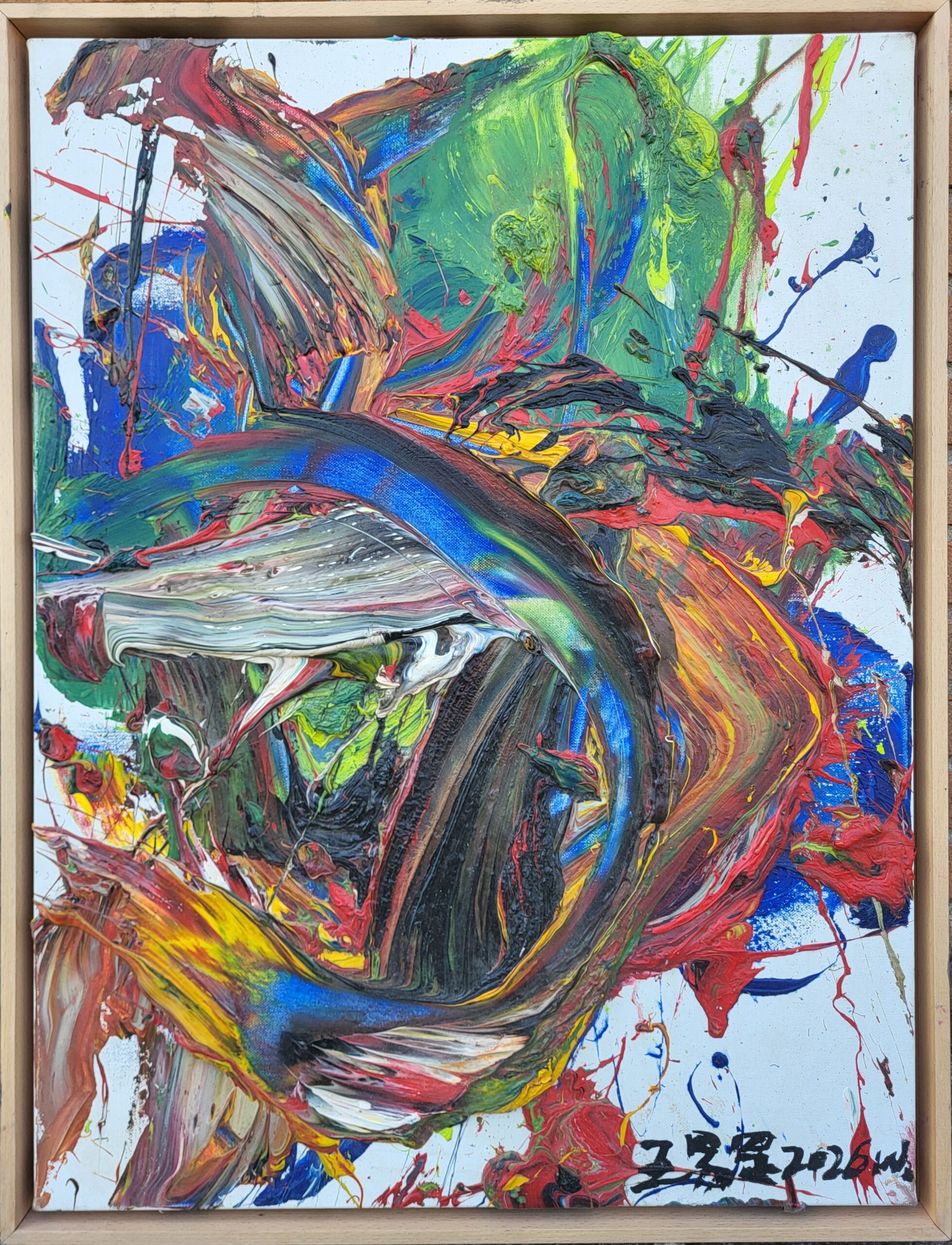
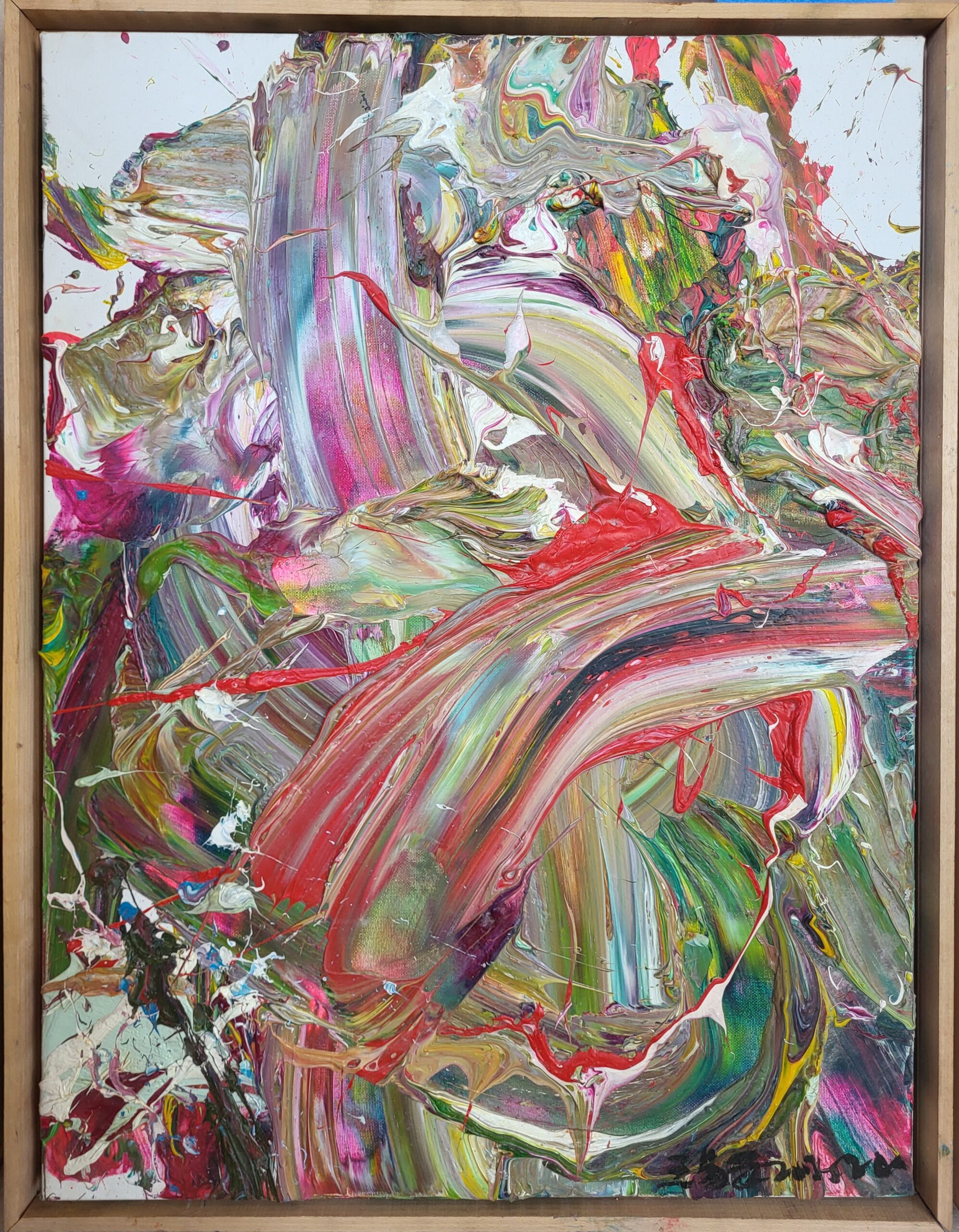
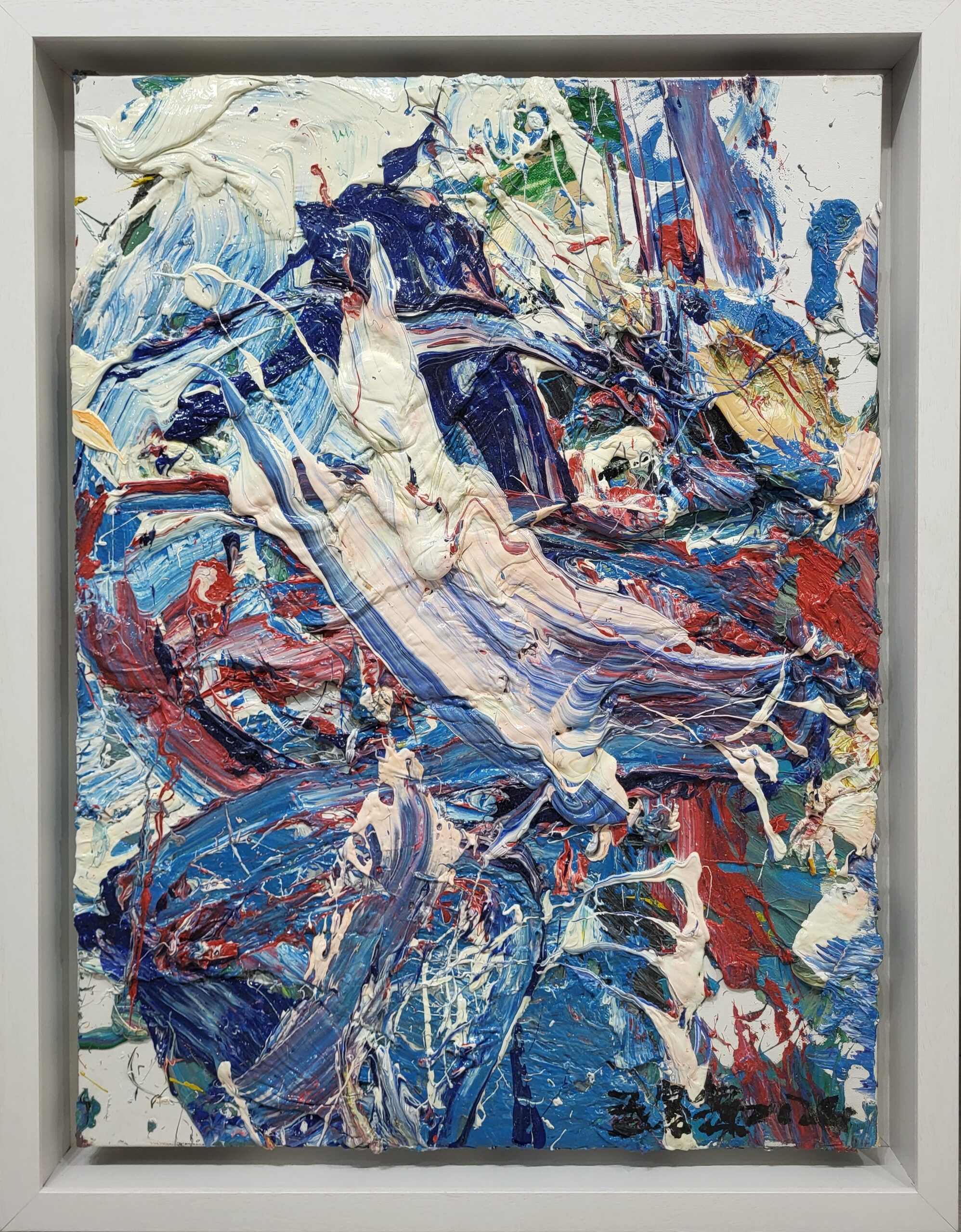
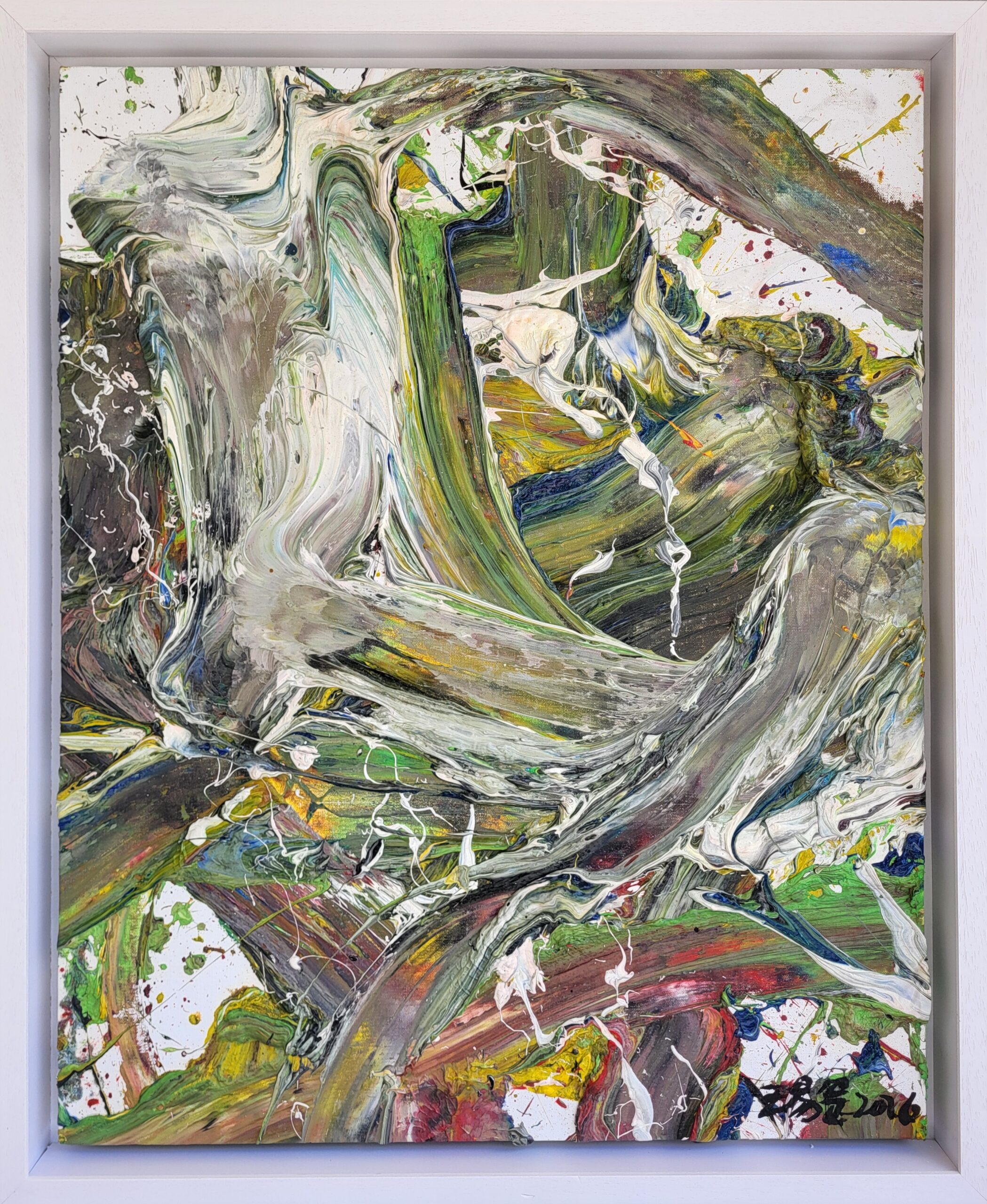
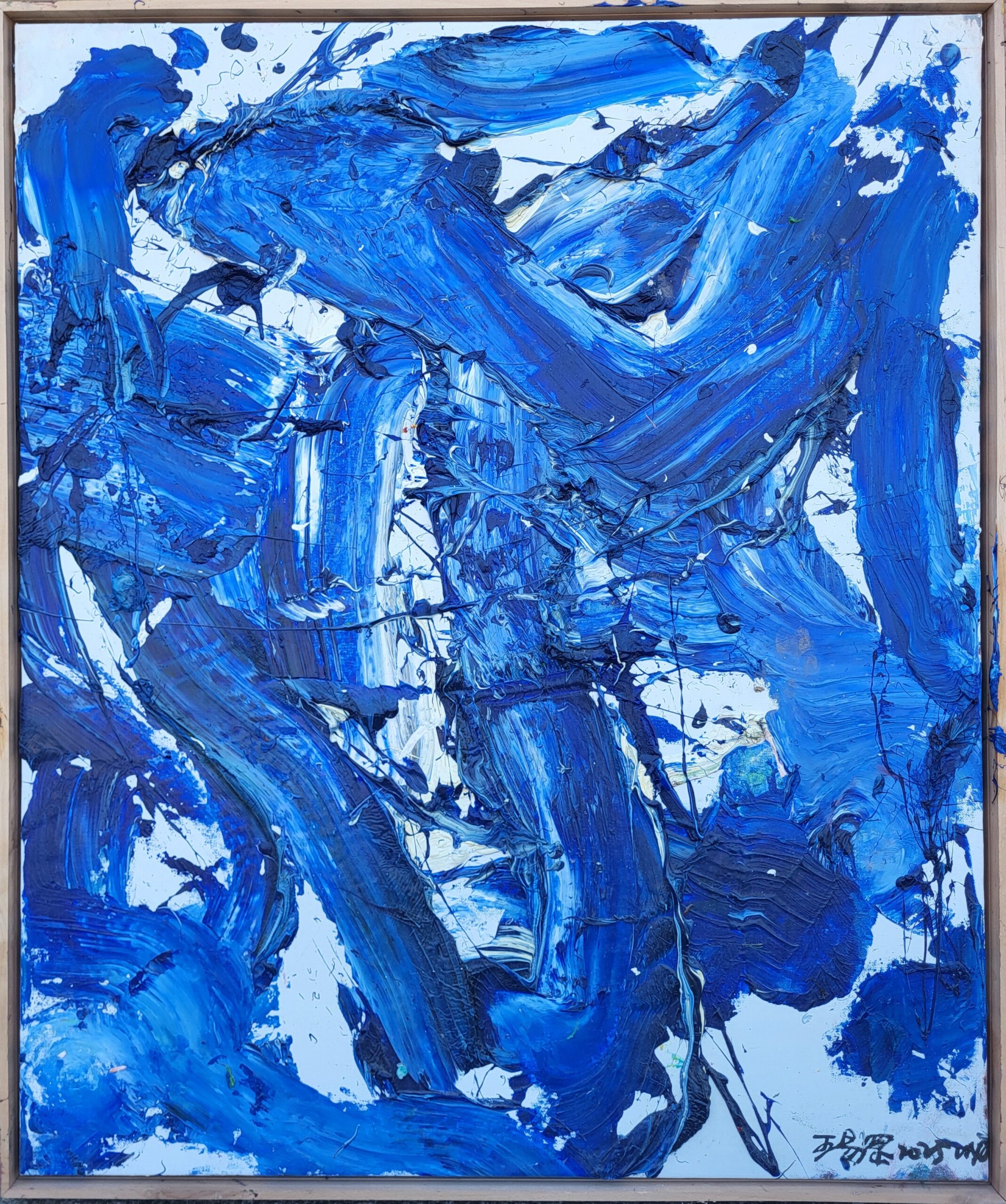
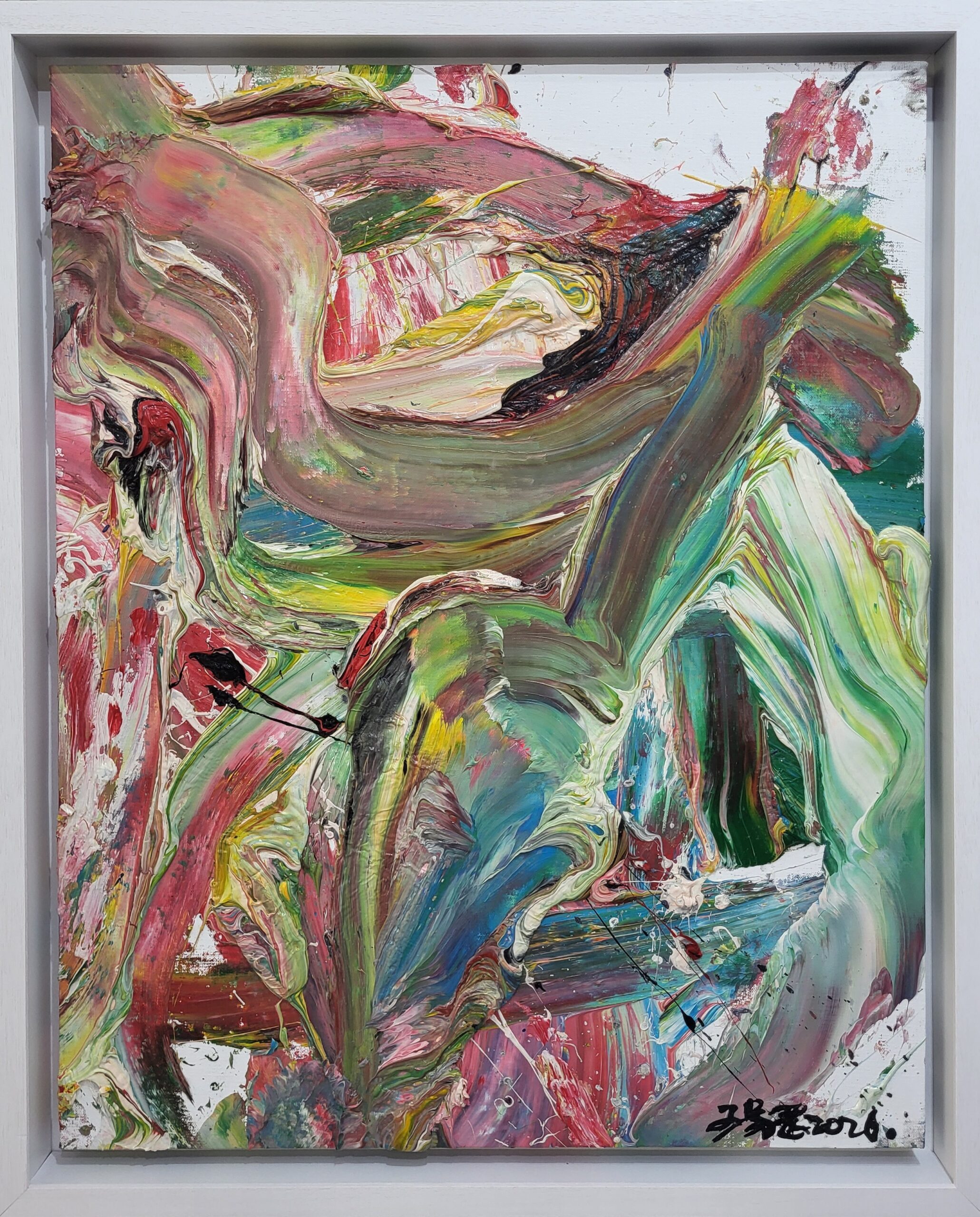
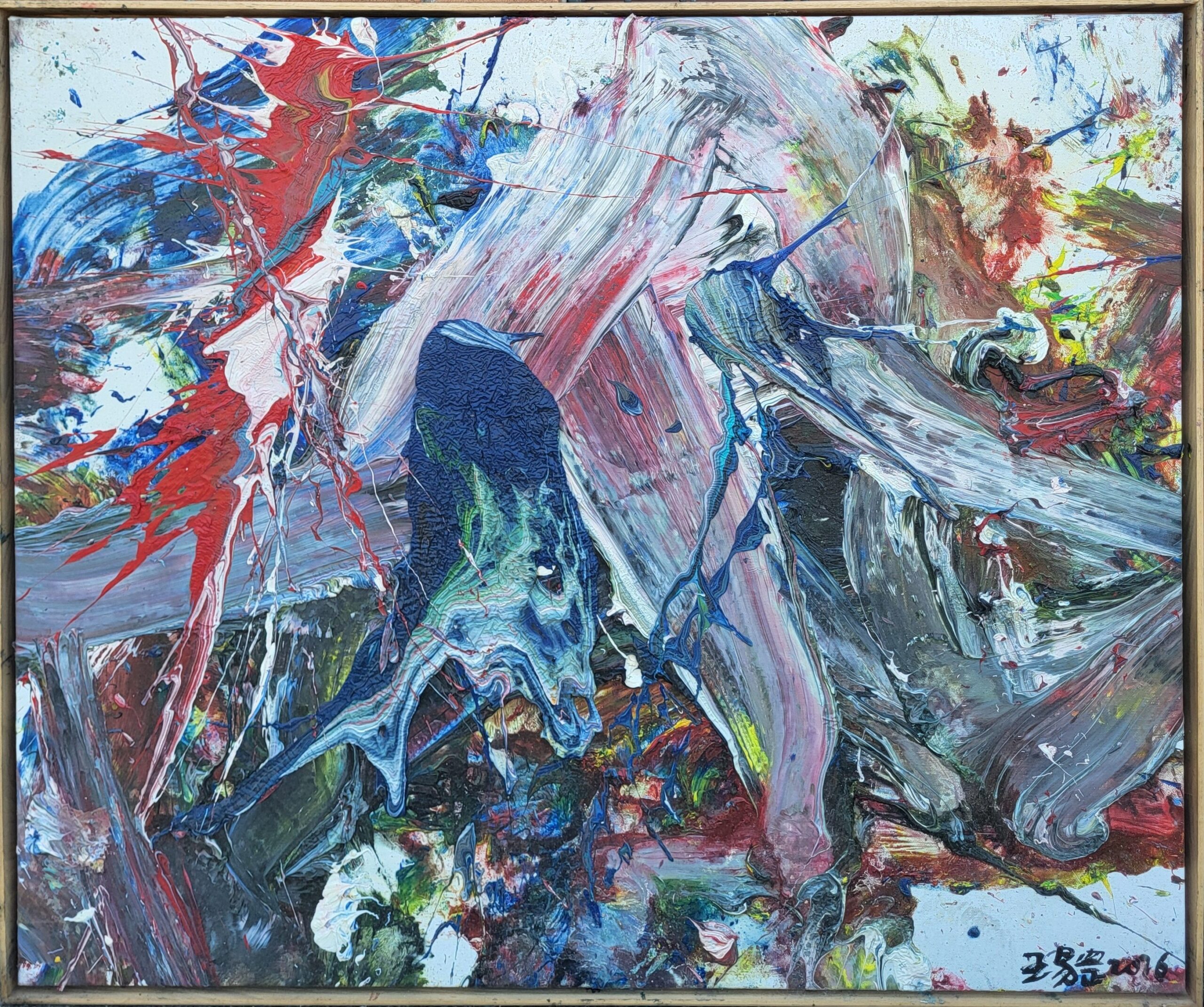
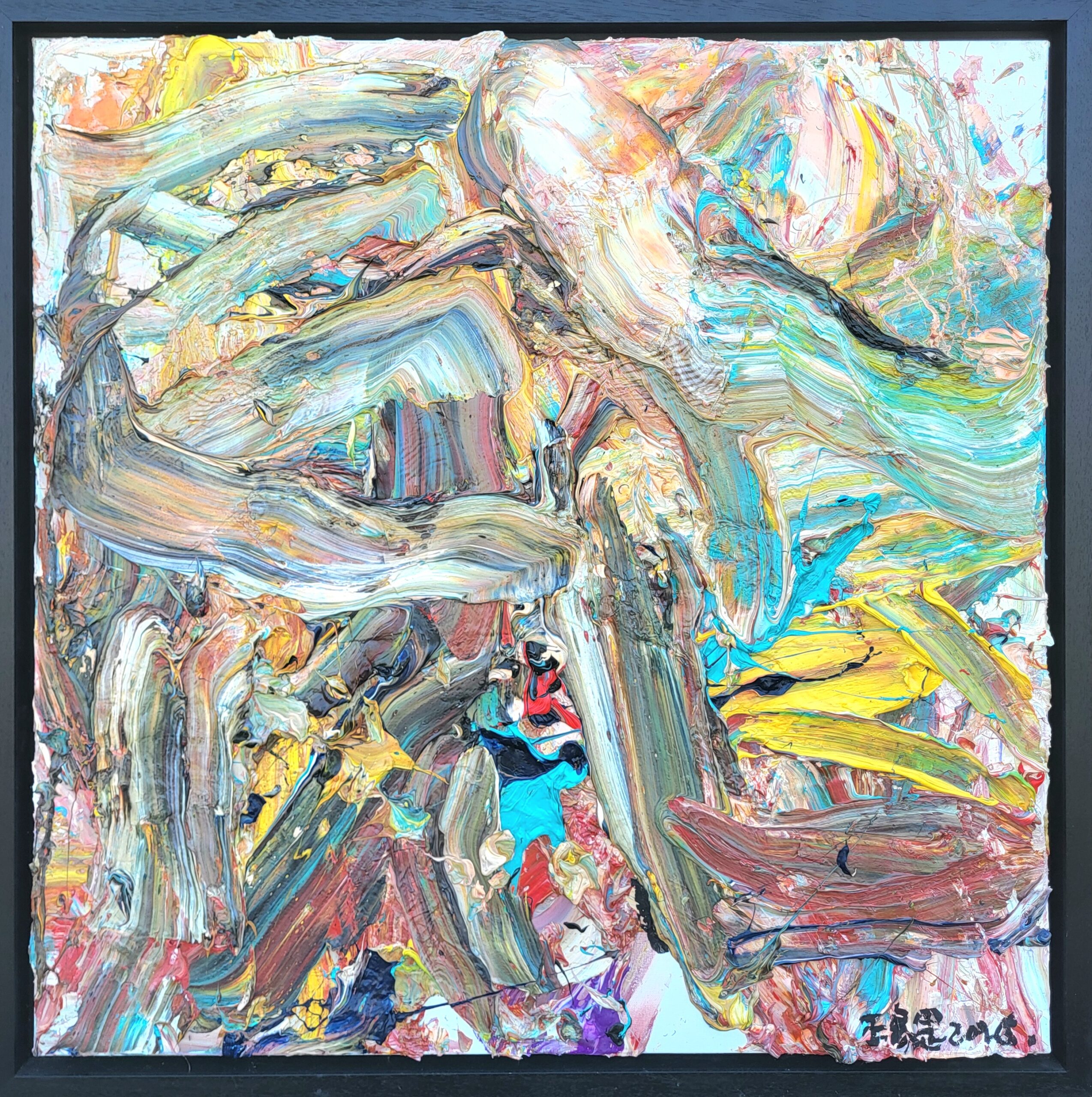
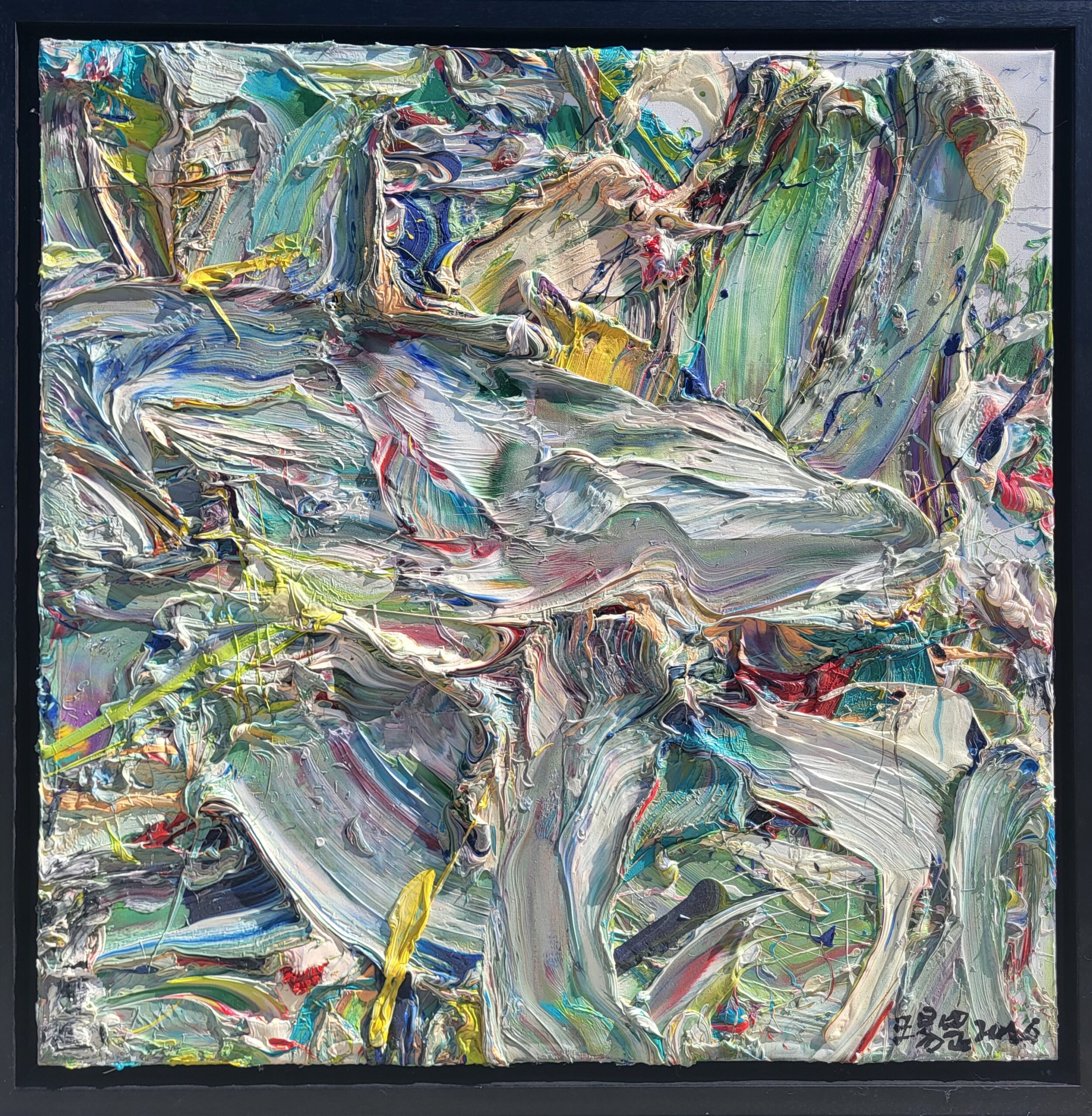
Wang Yigang was born in 1961 in Heilongjiang province and is one of the best known contemporary artists in China. Prior to his graduation in 1986, Wang attended the National Art Exhibition of the Young Artists and was awarded the National Youth Art Prize. Wang style can be widely described as abstract art, despite the presence of some recognizable shapes. The artist’s preference for abstract visual language rise from his idea that narration and logic are barely useful in art. Intense colors count as the main element in his work. Furthermore, the art of Wang is based on the gesture: a quick gesture that comes from a deep impulse and above all accompanies the materials. His work can be divided into distinct periods. The first period includes works more oriented to the figurative, with affinity to Cubism and Futurism. The second period of Wang, which is closely related to real life, can best be told as Pop Art. During this period Yigang is quite sensitive to elements such as posters, advertisements and political topics, which leads him to a rather large production of paintings. in collage. Since 2000 he has rediscovered Chinese culture; paints a series of works related to traditional Chinese dyeing. The subsequent period of Yigang which then leads us to the most recent works is to be considered purely conceptual and abstract. He paints with his body and his works are never pre-designed, everything develops in the painting process. It piles up layer upon layer of pigments, continually destroying and revising the work until it considers it completed. In recent years the expression of his brushstrokes has become more colorful and richer. All this indicates the full liberation of the artist’s creative spirit. Although the artist has shown pluralism in style, from figurative to Abstract Expressionism and Pop Art, he has always been reflecting upon his own state of freedom on a deeper level. Yigang distinguishes no line between his life and his art, as he even states “my works of abstract art has proven my own existence.” He tells his story through painting, a story that remains impressed in the matter of the painting. For Yigang, painting is live material, to know, study, love and practise.